

Sustainability
Pollution Prevention / Chemical Substances Management
- Control of Chemical Substances in Products
- Initiatives at Sites
Control of Chemical Substances in Products
In order to comply with environmental laws and regulations in each country where our products are sold, we conduct thorough quality control of parts delivered daily in accordance with the Standards on the Management of Certain Chemical Substances established in 2003 and maintain a chemical substance control system that covers our entire supply chain.
Control of Chemical Substances Contained in Products
In order to produce products that do not contain any substances prohibited by laws or regulations, it is essential that prohibited substances are not be included in any parts, materials, or auxiliary materials. We use X-ray fluorescence spectrometers and phthalate screening systems installed at all of our plants to test all parts, materials, as well as auxiliary materials for chemical content and make sure that none of them contain any hazardous substances prohibited by the EU RoHS Directive* or other similar standards. We also conduct audits of suppliers to determine whether they have established adequate chemical substance control systems ensuring that prohibited substances are not contained in their products, and procure parts, materials, and auxiliary materials only from suppliers who have met our transaction standard.
* Effective July 2006, the EU RoHS Directive prohibits the use of the following ten hazardous substances in electrical and electronic equipment sold on the market. (1) Lead, (2) Mercury, (3) Cadmium, (4) Hexavalent chromium, (5) Polybrominated biphenyls (PBB), (6) Polybrominated diphenyl ethers (PBDE), (7) Bis(2-ethylhexyl) Phthalate (DEHP), (8) Butyl Benzyl Phthalate (BBP), (9) Dibutyl Phthalate (DBP), (10) Diisobutyl Phthalate (DIBP)
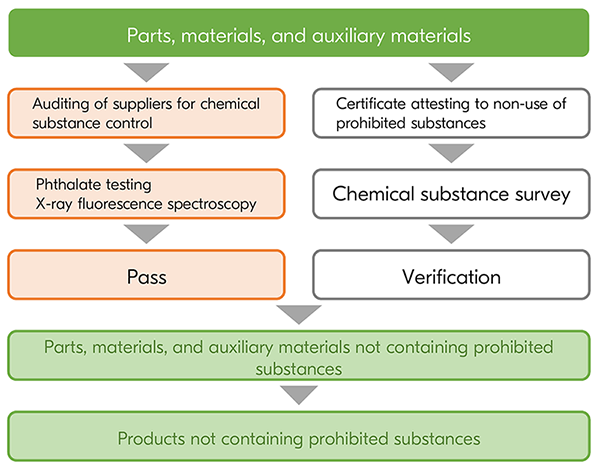 Efforts to Control Chemical Substances Contained in Products
Chemical Substance Control System
We maintain a system to control the chemical substances contained in our products. Dubbed the Kyocera Document Solutions Green Procurement System (KDGPS), it is compatible with chemSHERPA-AI/CI, an information sharing program run by the Chemical and circular Management Platform-consortium (CMP) that has been promoted for use across the board by the Japanese Ministry of Economy, Trade and Industry. Designed to reduce the burden on suppliers, the system enables both our suppliers and us to exchange survey requests and responses and check each other's status online. Enabling quick and reliable management of chemical substances, the system can also accommodate the addition of substances of very high concern (SVHCs) under the EU REACH regulation as well as calculate their content in products.
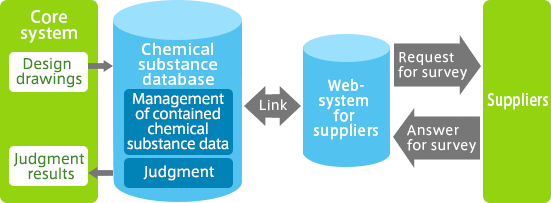 Chemical Substance Control System
Survey of Chemical Substances Contained in Products
To ensure that our products comply with chemical substance-related laws and regulations as well as eco-labelling criteria in each country, we established the Standards on the Management of Certain Chemical Substances in December of 2003. We update these standards each time chemical substance-related laws and regulations in a country are enacted or amended. Also included in the standards are additional SVHCs* under the EU REACH regulation as well as any changes to exemptions from the EU RoHS Directive.
* Substances of very high concern (SVHCs) are substances that may have serious effects on human health due to their carcinogenicity, reproductive toxicity, as well as other characteristics, and are candidates for inclusion in Annex XIV (Authorization List) of the EU Registration, Evaluation, Authorization and Restriction of Chemicals (REACH) regulation.
Supplier Audits
Before starting to do business with a new supplier, we always conduct an audit of its chemical substances management processes in order to ensure the adequate control of chemical substances. As a matter of principle, we only do business with suppliers who have passed the audit. We also distribute a Chemical Substance Self-Evaluation Checklist to our suppliers every year and ask them to conduct a self-assessment of their daily maintenance and management processes. We then review their self-assessment results to determine whether they are properly managing chemical substances.
Initiatives at Sites
Kyocera Document Solutions properly manages chemical substances used in our production and research and development activities at every stage, from procurement and storage to use and disposal, in an effort to prevent environmental pollution of the air, water, and soil.
We also regularly verify compliance with relevant laws, regulations, and regulatory requirements, and review our management practices and pursue continuous improvement based on inspection results and operational conditions at each site.
Proper Management of Chemical Substances
We properly monitor and manage the amounts of Class I Designated Chemical Substances under the PRTR Act*1 released into the environment and transferred off-site. In addition, when introducing new chemical substances, we use Safety Data Sheets (SDSs)*2 in accordance with applicable laws and regulations to verify, prior to the procurement, whether the substances are subjected to relevant regulations and whether they contain any prohibited substances. We also ensure confirmation in advance of the management methods, storage conditions, and disposal procedures required for their use, and then determine whether they can be introduced.
Furthermore, we are promoting the use of QR codes attached to chemical containers together with a weight measurement system to record and manage information such as users, quantities used, and inventory levels. This enables us to accurately monitor the use of chemical substances, improve the accuracy of inventory management, and identify risks such as leaks and losses at an early stage in order for appropriate action can be taken.
 QR Code-Based Weight Measurement System *3
*1 PRTR stands for Pollutant Release and Transfer Register. The PRTR system is based on legislation that promotes the identification and management of the amounts of specified chemical substances released into the environment and transferred off-site.
*2 SDS stands for Safety Data Sheet. An SDS is a document that provides information on the hazards of chemical substances and chemical products, as well as methods for their safe handling.
*3 The illustration was created using Microsoft Copilot.
Prevention of Environmental Pollution
We have established procedures to appropriately manage gases released into the atmosphere and wastewater generated through our business activities in order to prevent environmental pollution caused by chemical leaks and spills. Emission standards are managed based on the Kyocera Group Environmental Management Standards, which are more stringent than applicable laws and governmental regulations. In addition, each site establishes its own internal environmental management standards, and the Head Office department responsible for environmental and safety management regularly verifies compliance.
When storing chemical substances, we take thorough measures to prevent damage to chemical containers and segregate substances with different properties. Through these measures, we work to reduce the risk of leaks and spills and prevent environmental pollution incidents before they occur.
Water Resource Conservation
We recognize water as an essential resource for our business activities and an important environmental issue. Each site monitors its water consumption and works to reduce water use, while appropriately managing and treating wastewater generated through business activities in accordance with relevant laws and regulations.
We also continuously manage the operation of wastewater treatment facilities and conduct water quality monitoring and inspections to prevent water pollution. If any abnormality in the water quality is detected, we promptly take measures to prevent wastewater from being discharged outside the site, thereby preventing the release of contaminated water and protecting the water environment.
*4 The illustration was created using Microsoft Copilot.
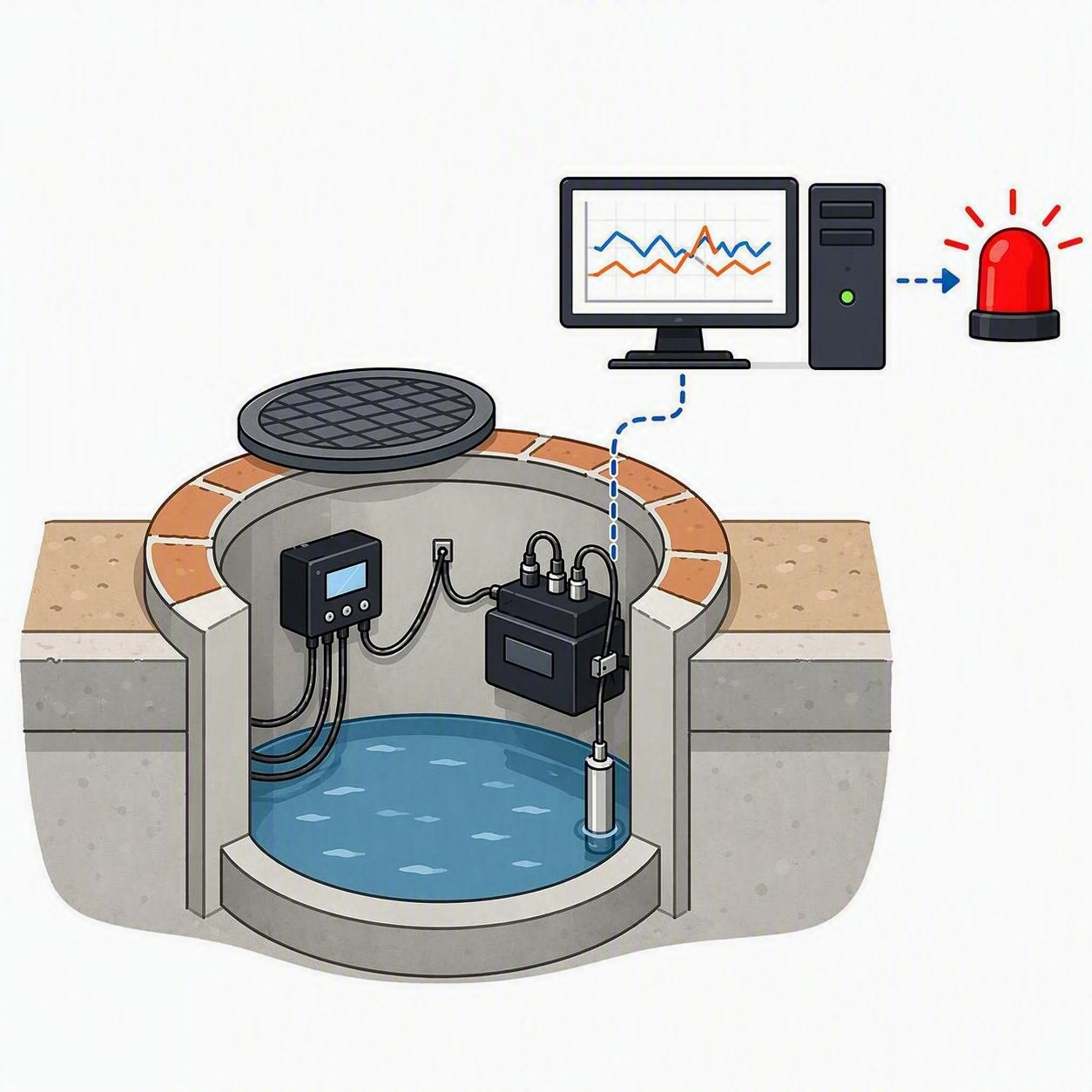 Online Monitoring System for Septic Tanks *4
Management of Asbestos and PCBs
We appropriately manage asbestos in buildings and other structures in accordance with relevant laws and regulations. When carrying out demolition, renovation, or other construction work, we conduct preliminary surveys by qualified personnel to determine whether asbestos is present. Where necessary, we take measures to prevent the dispersal of asbestos and appropriately carry out notifications, work management, and waste disposal as required by law.
We also appropriately store and manage PCB (polychlorinated biphenyl) waste in accordance with the Act on Special Measures concerning Promotion of Proper Treatment of PCB Wastes, the Waste Management and Public Cleansing Act, and other relevant laws and regulations. At storage locations, we take measures to prevent leaks and dispersal and ensure that storage areas are kept locked, while conducting regular inspections and maintaining appropriate inventory records. Going forward, we will continue to ensure proper treatment in accordance with applicable laws and regulations, working to prevent environmental pollution and ensure safety.
Emergency Response
We have established a management system based on relevant laws and internal regulations to appropriately manage environmental risks associated with chemical substances from procurement and storage through use and disposal.
In the event of an emergency such as a chemical leak, spill, or fire, ensuring the safety of human life is our highest priority. We take measures to prevent the spread of damage and minimize impacts on the surrounding environment, we promptly report the situation to relevant government authorities, and provide appropriate information.
We also work to strengthen preventive measures and improve our response capabilities through regular risk assessments, equipment inspections, and emergency response drills. Going forward, we will continue to promote ongoing improvement activities and work to protect the environment and ensure the safety of local communities.
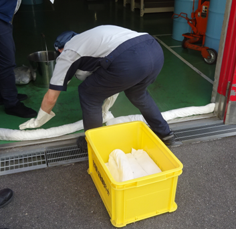 Emergency Response Drill Simulating a Chemical Leak
